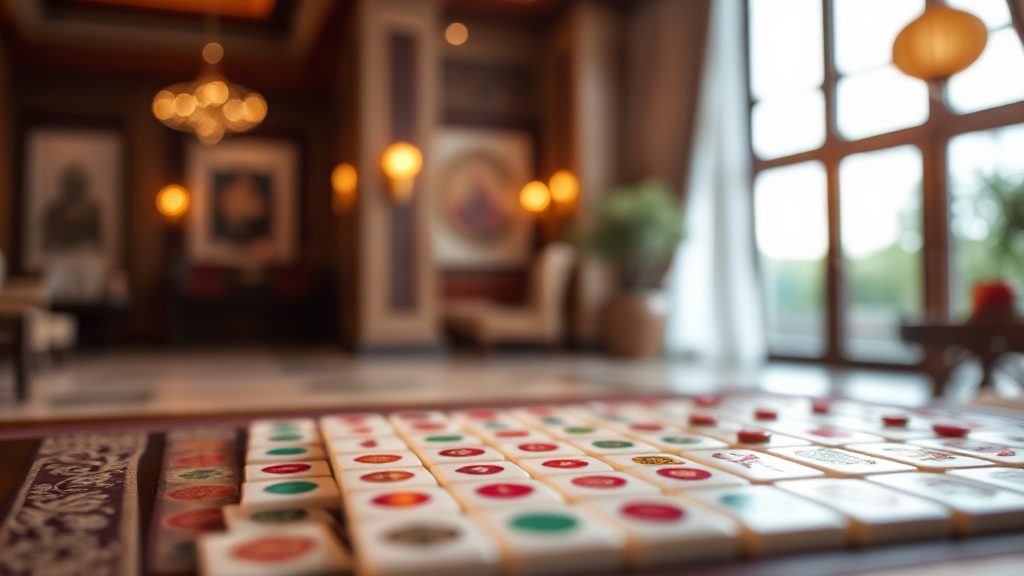
Sound, Motion, Color: How Mahjong Ways Feedback Shapes Attention
Think of the last time a game made you look up before you consciously decided to. That tiny chime, the flash of gold, the reel that slowed down just enough to feel important — those are not decoration. They are engineered feedback, and in slot online gacor titles like Mahjong Ways, they are doing far more work than most players realize.
The search intent behind “slot online gacor” is usually practical: players want to know which games feel responsive, which ones pay attention to them, and how to read the signals. The short answer is that a gacor slot is not only about payout patterns — it is about how the game communicates with your senses. This article breaks that communication down by sound, motion, and color, then shows how to enjoy the feedback without letting it hijack your focus.
Sound: The First Cue You Notice and the Last You Forget
Audio is the fastest channel a game has. A short chime reaches your attention before you can name it, which is why Mahjong Ways uses layered sounds for different events: a soft click for a standard spin, a rising tone for a near-miss, and a fuller chord when a symbol cluster connects. Each layer tells you something without text.
Why the Reel Stop Sound Matters More Than the Win Jingle
The reel-stop tick is the metronome of the session. When stops are crisp and evenly spaced, the game feels honest and easy to follow. When they blur together or feel delayed, your brain spends energy guessing instead of enjoying. Listen to the stop rhythm first, before you judge anything else about a slot.
The Near-Miss Sound and Its Pull
A near-miss often gets a slightly brighter sound than a normal spin. That is intentional sensory design — it creates a sense of almost, which is more stimulating than a plain loss. Recognizing that cue is the difference between playing with awareness and reacting on reflex. If you notice the bright tone repeatedly pulling your finger back to spin, that is your signal to pause, not to speed up.
Motion: How Animation Directs Your Eyes
Mahjong Ways uses motion to guide attention across the grid. Winning symbols tend to pulse, connected clusters animate in sequence, and the multiplier path lights up step by step. Good motion tells a story: here is what matched, here is what it produced, here is what happens next.
Pacing as a Trust Signal
Fast, smooth animation feels responsive. Choppy or overly long animations feel like the game is stalling. Motion pacing is one of the clearest signs of a well-built slot. If every cascade resolves in a predictable rhythm, you can follow the outcome without strain — and that reduces the mental fatigue that leads to careless spins.
The Cascade Effect and Attention Loops
When a cascade triggers, the grid clears and refills in a continuous motion. That loop is satisfying, but it also keeps your eyes locked on the screen longer than a single static result would. Using motion well means letting a cascade finish, reading the result, and then deciding — not spinning again just because the animation felt good.
Color: The Quiet Signal Behind Every Symbol
Color does the background work. In Mahjong Ways, warm golds and reds mark high-value symbols and multiplier states, while cooler tones sit behind the grid to keep contrast readable. A well-designed palette lets you identify symbol tiers at a glance, even in peripheral vision.
Contrast, Not Saturation, Is What Helps You Read the Grid
Bright is not the same as clear. The best feedback uses contrast between symbol and background so your eyes can separate a winning cluster from the noise. If a screen feels loud but hard to read, the palette is working against you. Readable contrast is what turns color into information.
Color Shifts as State Changes
Many modern slots shift the border or glow when a special mode is active. That color change is a state indicator, not a promise. Treat it as “the rules have changed,” then check what actually changed — multiplier, symbol set, or cascade behavior — before adjusting your approach.
Using Feedback Without Being Distracted by It
Feedback is a tool, and like any tool it works best when you set the terms. The practical close here is simple: decide your session length and spin budget before you start, then use the sensory cues to stay oriented rather than to chase excitement.
- Set a spin limit before the first sound cue plays. Decide how many spins you will take, then stop when you reach it — not when the audio feels less exciting.
- Watch one full cascade cycle without spinning. This trains you to read motion instead of reacting to it.
- Turn the volume down if the near-miss tone keeps pulling you back. Lower audio reduces reflex spinning without removing useful cues.
- Check contrast and readability before you commit to a session. If the grid is hard to parse, the feedback is failing you.
Players who describe a slot online gacor experience usually mean the game felt clear and responsive — sound, motion, and color all pointing at the same result. That clarity is the real feature. When feedback is readable, you can enjoy the design and still keep your attention where it belongs: on your own decisions.
FAQ: Sensory Feedback in Mahjong Ways
Does sound actually affect how I play a slot?
Yes. Audio reaches attention faster than visual text, so cues like near-miss tones and win chimes can influence how quickly you spin again. Noticing those cues is the first step to playing on your own timing.
Why do cascades in Mahjong Ways feel so satisfying?
Cascades combine motion and sound into a short loop: symbols clear, refill, and resolve. That loop is designed to be readable and rewarding, which is why it holds attention. Enjoy it, but let each cascade finish before deciding your next move.
Is bright color a sign of a better slot?
Not by itself. What matters is contrast between symbols and background, so you can read clusters quickly. A bright screen with poor contrast is harder to follow than a calmer palette with strong separation.
How do I stop feedback from distracting me?
Set a spin limit and session time before you start, lower the volume if audio pulls at you, and watch one full cascade without spinning. These small habits keep the sensory design in its proper role: information, not instruction.
Leave a Reply