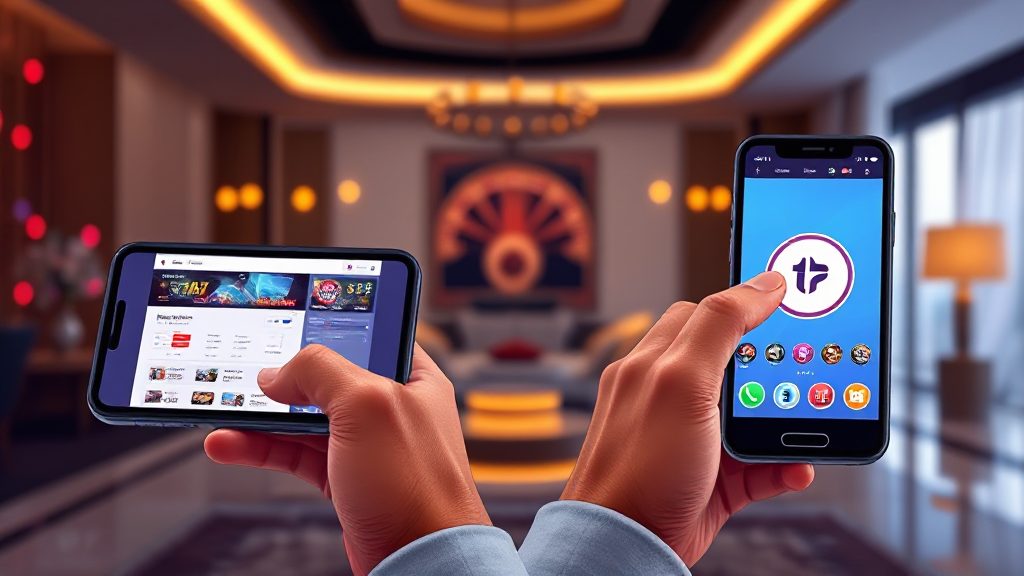
Two Readers, Two Ways of Using tk999
Two people in Dhaka can share the same goal and still want completely different tools. One reader wants tk999 open in a browser tab, ready to close when the day gets busy. The other wants an icon on the home screen and a session that starts in one tap. This article follows both of them through an ordinary day, then compares what each gained and what each gave up.
Neither approach is the default winner. The browser reader values control and zero storage; the app reader values speed and continuity. By the end, you should recognize which habits sound more like yours.
The Browser Reader Starts With a Clean Device
Reader A opens a laptop at 8 a.m. and types the address into a tab she already keeps pinned. Nothing is installed, so nothing needs updating. Her first gain is zero storage footprint, which matters on a phone that is already full of photos and work files.
She logs in, checks the sports and gaming sections, and closes the tab when a meeting starts. The session ends cleanly because the browser is the boundary. There is no background process, no notification badge, and no icon tempting her during work hours.
What the Tab Gives Her
The tab is portable across devices. She can sign in from a borrowed laptop or a tablet without installing anything, and the experience stays roughly the same. That flexibility is her main reason for staying browser-first.
The trade-off is that every visit starts from the address bar. She must remember the correct URL and avoid lookalike domains. Bookmarking the official page solves most of that, but it is one more habit to maintain.
Midday: The Browser Reader Checks In Without Commitment
At lunch, Reader A opens the tab again for a few minutes. She reviews what changed, places a small wager if something interests her, and closes it. The whole visit takes less than five minutes, and the browser keeps her logged in only as long as she allows.
This rhythm suits people who treat the platform as one stop among many. The browser asks for a decision each time, and that small friction works as a natural limit. She never has to set a reminder to log out because closing the tab does most of the work.
The Hidden Costs of the Tab
Browser sessions depend on connection quality and on the site loading fresh each time. On a weak mobile network, that can mean a slower start than an installed app. She also has to manage passwords and two-factor steps manually if she clears her browser data often.
None of these costs are severe, but they are real. The browser reader pays in small moments of setup rather than in storage or notifications.
The App Reader Installs Once and Moves Faster
Reader B installs the tk999 app on his phone during his morning commute. He signs in once, and from then on the icon sits beside his messaging apps. His first gain is speed to a session: one tap, a short load, and he is inside.
The app also remembers his preferences more reliably. Filters, favorite sections, and recent activity are waiting where he left them. For someone who checks in several times a day, those saved seconds add up.
What the Installed Version Changes
An installed app can push notifications, which is both its strength and its risk. Reader B turns on alerts for major events and turns off everything else. That control is important because a noisy app becomes a distraction rather than a tool.
He also gains a more consistent layout across sessions. The interface does not shift because a browser updated or an extension interfered. That consistency makes quick visits feel routine rather than exploratory.
Evening: The App Reader Leans on Continuity
After dinner, Reader B opens the app while watching a match. He moves between sections without re-entering credentials, and the app keeps his place when he switches to a message and back. Continuity is the quiet benefit that browser users notice only when it is missing.
The cost appears in maintenance. Apps need updates, and older phones may struggle with newer versions. He also gave up some storage and accepted an icon that invites frequent checking. His discipline has to come from settings and personal rules, not from the friction of typing a URL.
When the App Is the Better Fit
The installed version suits people with a stable device, a reliable connection, and a habit of short, frequent visits. It also suits users who want alerts for specific events rather than checking manually. If those describe you, the app reader’s day will feel familiar.
It fits less well on shared devices or phones with very little free space. In those cases, the browser reader’s approach avoids clutter and privacy questions.
Registration and Security Look Different on Each Path
Both readers complete the same core steps: create an account, verify details, and set up a secure way to sign in. The difference is where that happens. Reader A registers in a browser and keeps her credentials in a password manager. Reader B registers through the app and relies on the device’s own security, including a screen lock and biometrics where available.
Security habits matter more than the delivery method. Use a strong, unique password, enable any available two-factor step, and sign out on shared devices. Neither the tab nor the icon protects you if the account itself is weak.
A Simple Comparison
| Factor | Browser reader | App reader |
|---|---|---|
| Setup effort | None beyond a bookmark | One download and sign-in |
| Storage used | Negligible | Moderate |
| Speed per visit | Depends on typing and load | Faster, one tap |
| Notifications | Off by default | Configurable |
| Device flexibility | High | Lower |
| Maintenance | Browser updates only | App updates required |
The table is not a scorecard. It shows where each reader spends effort and where each saves it. The right column for you is the one whose costs you are willing to pay.
What Each Reader Gained and Gave Up
Reader A gained flexibility, a clean device, and natural limits on how often she checks in. She gave up some speed and accepted a little manual setup each time. Her approach rewards people who value control over convenience.
Reader B gained speed, continuity, and configurable alerts. He gave up storage, accepted update chores, and took on the job of managing notifications so they do not manage him. His approach rewards people who visit often and want the platform to feel like part of the phone.
The honest conclusion is that both readers made reasonable choices for their own habits. If you are unsure, start in the browser for a week, then install the app and compare your own day. The better option is the one that fits your routine without demanding extra discipline you do not have.
Leave a Reply