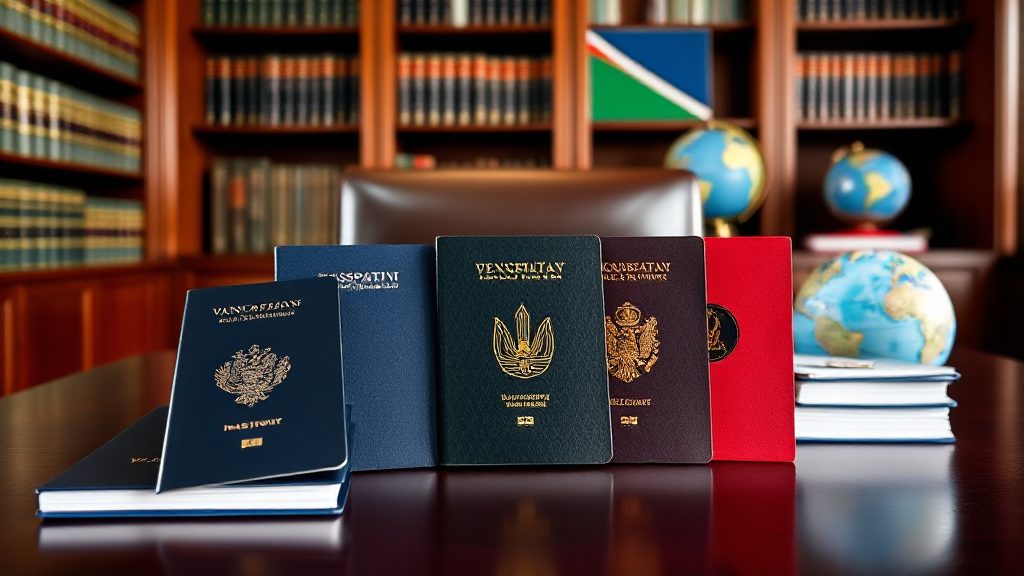
Vanuatu Versus Other Second-Passport Routes: A Fair Comparison
If you are reading this, you are probably not looking for a single answer. You are weighing several jurisdictions at once, comparing Caribbean programs against European options, and trying to work out where a second passport actually earns its keep. That is the right instinct. Citizenship by investment is a significant commitment, and the differences between programs matter far more than the marketing gloss suggests.
To make the comparison fair, we need consistent criteria. Cost should mean the real, all-in outlay, not just the headline contribution. Timeline should mean the realistic interval between filing and holding a passport, not the fastest case ever recorded. Due diligence should be judged on depth and predictability, not just on whether a fee exists. Family inclusion should be measured by who can be added and at what price. And visa-free access should reflect actual mobility, including how a passport is received at major hubs. With those five dimensions in view, one program that deserves a place in the shortlist is the one detailed at https://vanuatupassportbyinvestment.com/, which sets out the Vanuatu citizenship by investment route in practical terms.
Cost: Headline Contributions Versus All-In Outlay
Cost is where most comparisons go wrong first. Advertised minimums are rarely the amount a family actually pays. A fair reading separates the non-refundable government contribution from due diligence fees, application and processing charges, professional fees, document legalisation, translations, courier costs, and the expense of travelling for any required steps. Only when those are added does the true number emerge.
Vanuatu’s structure is comparatively transparent. The program is built around a US$130,000 non-refundable contribution, with a US$5,000 due diligence fee sitting alongside it. Because the contribution is a direct payment rather than a property purchase or a fund subscription, there is no ongoing asset to maintain, no exit strategy to plan, and no market risk tied to the qualifying investment. That simplicity is a genuine cost advantage for applicants who want a defined, one-time outlay rather than a multi-year financial commitment.
Caribbean programs generally sit in a similar contribution band but often carry heavier professional and processing layers once dependants are added. European routes are a different category altogether. Portugal’s golden visa has moved away from pure real estate toward fund subscriptions, and Malta’s citizenship route carries a substantially higher contribution plus property and residency obligations. For an investor comparing like for like, Vanuatu tends to land in the lower-middle of the range on total outlay, and it does so without requiring a property purchase or a long-term fund lock-in.
The practical takeaway is to request a full cost schedule in writing from any program you are considering, then compare the totals rather than the headlines. Programs that look cheap at the entry point frequently become expensive once dependants, renewals, and compliance costs are layered in.
Timeline: How Long Until the Passport Is in Hand
Timeline is often the deciding factor for investors with a specific travel or relocation need. The honest comparison is not the marketing promise but the realistic interval from a complete submission to an issued passport, including the time required to gather documents, complete due diligence, and receive approval.
Vanuatu is widely regarded as one of the fastest citizenship by investment routes available. Applications are processed on a defined schedule, and because there is no residency requirement, no physical presence obligation, and no property purchase to complete, the critical path is shorter than in programs that require a stay, an investment holding period, or a two-stage approval. Applicants who prepare their documentation properly can move from submission to citizenship within a matter of months rather than years.
By contrast, Caribbean programs typically run on a similar order of magnitude but can extend when due diligence queries arise or when dependant documentation is incomplete. European routes are slower by design. Portugal requires a residency period before citizenship eligibility, and Malta’s route involves a residency phase and a longer naturalisation timeline. For an investor whose need is measured in months, not years, that gap is decisive.
Speed, however, should never be confused with laxity. A fast program is only useful if its approvals are respected internationally. The right question is whether the timeline is fast because the process is efficient, or fast because the checks are shallow. Vanuatu’s answer to that question sits in the next section.
Due Diligence: Depth, Predictability, and Reputation
Due diligence is the dimension that separates durable citizenship from a document that creates problems later. A passport is only as strong as the vetting behind it. Programs with credible, independent, and consistently applied checks produce citizenships that are recognised, respected, and unlikely to be questioned at a border or by a bank.
Vanuatu applies a formal due diligence process with a defined fee, and applications are submitted through an authorised designated agent rather than directly by the applicant. That structure matters. A designated agent is responsible for assembling a compliant file, verifying documents, and liaising with the authorities, which reduces the risk of procedural rejections and ensures the application is presented in the form the program expects. The US$5,000 due diligence fee is a real cost, but it also signals that the program treats vetting as a substantive step rather than a formality.
Caribbean programs have strengthened their due diligence considerably in recent years, often in response to international pressure, and now apply multi-layer checks. European programs apply similarly rigorous standards and, in some cases, additional residency-based scrutiny. The fair comparison is not which program checks hardest, but which one applies its checks predictably and communicates the requirements clearly in advance. Unpredictable vetting is its own risk, because it makes timelines impossible to plan around.
For investors, the practical test is straightforward. Ask what documents are required, who reviews them, how long the review takes, and what happens if a query is raised. Programs that answer those questions clearly are easier to work with than those that leave applicants guessing.
Family Inclusion: Who Qualifies and at What Cost
Many applicants are not buying a passport for one person. They are planning for a spouse, children, and sometimes parents. Family inclusion is therefore a core comparison dimension, and it is frequently where the true cost difference between programs appears.
Vanuatu’s program is structured to accommodate family applications, allowing a spouse and dependent children to be included, with the contribution and fee structure scaling accordingly. Because there is no residency requirement, family members are not required to relocate, maintain a presence, or disrupt schooling and careers during the process. For families who want the option of a second citizenship without uprooting their current lives, that flexibility is a meaningful advantage.
Caribbean programs are similarly family-friendly, generally permitting spouses and dependent children, and several now include parents or grandparents under defined conditions. European routes vary more widely. Some allow broad family inclusion but require the family to satisfy residency conditions, which can mean physical relocation or extended stays. Others restrict which dependants qualify or impose higher thresholds for adult children.
The comparison point is not simply who can be included, but what inclusion costs and what it obliges the family to do. A program that includes a spouse at a modest additional cost and imposes no residency duty is often more practical for a globally mobile family than one with a lower headline figure but a relocation requirement attached.
Visa-Free Access: Reading Mobility Realistically
Visa-free access is the most quoted and least carefully examined metric in citizenship by investment. The number of destinations matters less than which destinations they are and how the passport is treated in practice. A passport that opens major business and transit hubs is worth more to most investors than one with a marginally higher count of small jurisdictions.
The Vanuatu passport provides visa-free or visa-on-arrival access to a substantial list of countries and territories, including key destinations across Asia, the Caribbean, and other regions. It is a genuinely useful travel document for investors who need to move efficiently without queuing for visas in advance. It is not, however, a substitute for European Union citizenship, and applicants whose primary goal is unrestricted Schengen access should weigh that honestly against programs that deliver it.
Caribbean passports offer strong mobility, particularly within the Schengen area and the United Kingdom, and are often chosen for that reason. European passports sit at the top of the mobility hierarchy but come with the residency obligations, timelines, and costs described above. The right choice depends on where you actually travel and what you need to do when you arrive.
A fair assessment means listing your real destinations, checking each one against the passport in question, and confirming whether the access is visa-free, visa-on-arrival, or requires an electronic authorisation. That exercise produces a far more useful answer than comparing headline counts.
Verdict: Which Route Fits Which Investor
There is no single best second passport, only the best fit for a particular set of priorities. The comparison above points to a clear pattern.
If your priorities are speed, a defined one-time cost, no residency obligation, and a practical travel document, Vanuatu is a strong contender. The US$130,000 non-refundable contribution and US$5,000 due diligence fee give you a transparent cost structure, the process is efficient, and the absence of a property purchase or residency requirement keeps the commitment clean. Families benefit from the ability to include dependants without relocating. For investors who want a second citizenship resolved quickly and without ongoing obligations, this route is difficult to match on convenience.
If your priority is European Union access, Schengen mobility, or a path that eventually leads to an EU passport, then a European program is likely the better answer, provided you accept the longer timeline, higher cost, and residency conditions. If you want strong mobility with a well-established program and are willing to work within a slightly longer processing window, a Caribbean option may suit you.
The disciplined approach is to rank your own criteria before you compare programs. Decide how much speed matters, how much you are willing to pay in total, whether anyone in the family needs to relocate, and which destinations you genuinely need to reach. Once those are settled, the comparison becomes straightforward, and programs that looked interchangeable separate clearly. For investors whose answers point toward a fast, obligation-light, and cost-transparent route, the Vanuatu option deserves serious consideration alongside the alternatives.
Leave a Reply